
Objects Record
Images
Metadata
Catalog Number |
1952X.00.316 |
Object Name |
Doll |
Record Under Review |
This catalogue record is under review. Curatorial staff are working to better understand and share the complicated history represented by this item. |
Title |
Indigenous Bisque Doll, Establo Leather, circa 1900 |
Date |
circa 1900 |
Year Range from |
1895 |
Year Range to |
1905 |
Description |
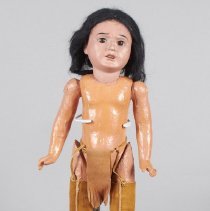
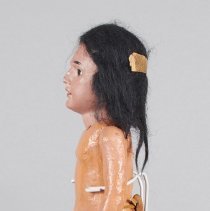
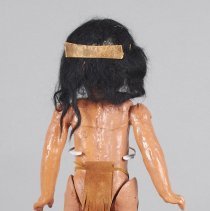
Indigenous bisque doll manufactured by Max Schelhorn circa 1900, with an outfit made by Establo Leather in 1974. The doll's head is made of bisque while the body is made of composition and jointed at the shoulders and hips. The doll wears shoes with two straps and yellow heels, and leather clothes custom made by Establo Leather. The doll has a black wig in a braid, brown glass eyes, and painted eyelashes and eyebrows. The mouth is open, showing four upper teeth. |
Notes |
Historic Context – Bisque Dolls Bisque replaced porcelain as the preferred ceramic material for toymakers because it was far less breakable and made using nearly identical techniques. Bisque is made by firing unglazed porcelain, which made the doll sturdier. Bisque dolls also have a pink, matte colour that looks more like human skin than the pure white of traditional porcelain dolls. Bisque dolls began production in the 1860s and were used as fashion dolls for wealthy families to teach their daughters to sew. By the 1890s, bisque made up most mass-produced doll heads. Small, all-bisque dolls were popular until 1930, but most bisque dolls had a body made of composite or cloth that could better withstand years of cuddling and play. Updated August 2024 |
Search Terms |
Establo Leather |
Subjects |
CHILDREN TOYS/GAMES |
Dimensions |
H-43 cm |
Collection |
Artifacts |